The world of design engineering and materials testing is being reshaped by the advent of artificial intelligence (AI), particularly large language models (LLMs) like Google Bard or ChatGPT. These AI models are not just about generating text; they hold transformative potential for mechanical and materials engineers, especially in the drone and UAV industry.
AI in Design Engineering
LLMs can analyze, interpret, and even generate complex engineering documentation and instructions. This capability allows design and FEA engineers to automate repetitive tasks, freeing them to focus on innovative problem-solving.
These AI models use Natural Language Processing (NLP) techniques to understand codes, clauses, formulas, and standards. With proper fine-tuning, they can develop accurate relationships between engineering variables and requirements within their neural networks. This allows design engineers to create systems that can automatically perform calculations based on the relevant formulas and clauses required for drone design.
AI as a Design Assistant and FEA Engineer
AI can act as a design assistant, capable of making informed decisions and applying codified standards to repetitive types of work. This significantly enhances productivity and efficiency in design engineering workflows.
AI can rapidly generate numerous potential solutions given a problem statement or a design specification. This broadens the design space, uncovering innovative approaches.
AI can also automate many tedious engineering process tasks. For instance, creating CAD models for structure design and analysis can be time-consuming and require a high level of knowledge. However, design engineers can leverage LLMs to instantly generate a CAD model by inputting fundamental design parameters. The LLM can further refine the design based on additional feedback and input provided by the engineer, streamlining the iterative design process.
AI can also play a significant role in material testing. The vast amounts of data that LLMs are trained on means that they can identify patterns and relationships that are not immediately apparent to human designers. Through this unique capability, AI could suggest a material or configuration that increases efficiency or has superior performance compared to more conventional human-led designs.
By leveraging AI’s ability to uncover hidden insights within complex data sets, design engineers can explore novel design possibilities that push the boundaries of conventional engineering practices. This leads to innovative solutions that may have otherwise been overlooked.
Conclusion
The integration of AI into design engineering and materials testing holds significant potential. From automating tedious tasks to generating innovative solutions, AI can act as a powerful tool for design engineers. As we continue to fine-tune these models and explore their capabilities, we can expect to see even more transformative changes in the field of design engineering.
However, it’s important to remember that while AI can enhance and streamline many aspects of design engineering, it doesn’t replace the need for human oversight, intuition, and expertise. The goal is to create a collaborative environment where AI and humans work together, leveraging their respective strengths to drive innovation and efficiency.
So, whether you’re a mechanical materials engineer or a scientist looking to streamline your workflows or a company seeking to stay at the forefront of technological advancements, now is the time to explore the potential of AI and LLMs in your operations. The future of product engineering is here, and it’s powered by AI. At AdvanSES we have already started allocating resources to this emerging field.
Artificial Intelligence (AI) has found numerous applications in mechanical engineering and materials testing, revolutionizing the field with its ability to analyze vast amounts of data and reveal complex interrelationships. Here are some notable applications:
Machine Vision and Learning: AI, particularly machine vision and machine learning, can significantly improve the technical level of material testing¹. Machine vision inputs the characteristics of the inspected object into the computer, while machine learning enables the computer to better analyze these characteristics and make testing conclusions. This process is characterized by high accuracy and speed, and can be used in all aspects of material testing¹.
Textile Material Testing: AI techniques such as image analysis, back propagation, and neural networking can be specifically used as testing techniques in textile material testing. AI can automate processes in various circumstances.
Materials Modeling and Design: AI techniques such as machine learning and deep learning show great advantages and potential for predicting important mechanical properties of materials. They reveal how changes in certain principal parameters affect the overall behavior of engineering materials. This can significantly help to improve the design and optimize the properties of future advanced engineering materials.
Mechanical Engineering: AI, especially machine learning (ML) and deep learning (DL) algorithms, is becoming an important tool in the fields of materials and mechanical engineering. It can predict materials properties, design and development of new materials, and discover new mechanisms of material formation and degradation.
These Artificial Intelligence AI applications in mechanical engineering and materials testing not only enhance the efficiency and accuracy of the testing process but also open up new possibilities for material discovery and design. AdvanSES has decided to be on the forefront of this emerging technology and has invested resources into new developments.
Source: (1) Application of Artificial Intelligence in Material Testing – ResearchGate. https://www.researchgate.net/publication/361295451_Application_of_Artificial_Intelligence_in_Material_Testing/fulltext/637efc6d2f4bca7fd0883bd8/Application-of-Artificial-Intelligence-in-Material-Testing.pdf. (2) Artificial intelligence (AI) in textile industry operational …. https://www.emerald.com/insight/content/doi/10.1108/RJTA-04-2021-0046/full/html. (3) Artificial Intelligence in Materials Modeling and Design. https://link.springer.com/article/10.1007/s11831-020-09506-1. (4) Artificial intelligence and machine learning in design of mechanical …. https://pubs.rsc.org/en/content/articlelanding/2021/mh/d0mh01451f. (5) Evolution of artificial intelligence for application in contemporary …. https://link.springer.com/article/10.1557/s43579-023-00433-3.
Material Characterization Testing of Drones and UAV Materials at AdvanSES
Composite Material Testing for Drones and UAV Applications
Unmanned Aerial Vehicles (UAVs), commonly known as drones, have revolutionized numerous industries, from agriculture and real estate to cinematography and defense. One of the key factors contributing to the versatility and performance of these drones is the use of composite materials in their construction [1,2]. Composite material testing for drones and UAV applications is both difficult and challenging. The use of fiber-reinforced plastic composite materials challenges drone UAV engineers to design and manufacture products with high strength, stiffness and low cost. The demand for more maneuverable, payload effective UAVs is increasing, where composite materials are playing an essential role in the progress of these new high-performance UAV aircrafts with special composite material characteristics like light weight and high strength. These composite materials are distinguished by Young’s modulus as compared to different kinds of metals and aluminum alloys. Multi-rotor type UAVs represent an extremely complex system in terms of design and control. Octacopter, hexacopter and Quadcopter are typical of such multi-rotor designs. Such a type of aircraft is an inherently unstable system, which results from the fact that it cannot independently return to the point of balance (hover) if it loses the functionality of the control loops but will fall or begin to move uncontrollably in space. Furthermore, multirotor UAVs are nonlinear systems since rotor aerodynamic forces and moment characteristics are nonlinear functions with respect to angular velocities and these reasons make the materials used in the manufacturing to be of high quality, load capacity with an infinite fatigue life for the application designed for.
Why Composite Materials?
Composite Material Layered Construction
Composite materials, such as polymers reinforced with carbon fibers (CFRP) and fiberglass (GFRP), are widely used in the manufacturing of drone components, including the fuselage, wings, and landing gear[1].
Polymer composite materials are widely used in various industries, including the manufacturing of drone UAV components, due to their numerous advantages:
High Strength-to-Weight Ratio: Polymer composites, such as those reinforced with carbon or glass fibers, offer a high strength-to-weight ratio[4]. This property is crucial in applications like drone manufacturing, where reducing weight while maintaining strength can enhance performance[4].
Durability: Composites are known for their durability. They do not rust, have high dimensional stability, and can maintain their shape in various conditions. This makes them suitable for outdoor structures and components that are designed to last for a long time.
Design Flexibility: Composites open up new design options that might be hard to achieve with traditional materials. They allow for part consolidation, and their surface texture can be altered to mimic any finish.
Improved Production: With advancements in manufacturing processes, composites are now easier to produce. Digital Composite Manufacturing (DCM), for instance, has made it possible to fabricate composite parts without manual labor.
Material Stability and Insulation: Polymers used in composites offer high material stability against corrosion, good electrical and thermal insulation, and are easy to shape, making them ideal for economic mass production[4].
These advantages make polymer composites an excellent choice for various applications, including the construction of drone components. However, it’s important to note that the use of these materials also necessitates comprehensive testing to ensure safety, reliability, and durability.
Moreover, compared to traditional materials like aluminum, composites can reduce weight by 15-45%, increase corrosion, fatigue, and impact resistance, and reduce noise and vibrations[1].
Testing Composite Materials
Testing composite materials is a critical aspect of ensuring their performance and reliability in various applications, including drone components. Here are some of the common methods used for testing composite materials:
Mechanical Testing: This includes tensile (tension), flexural, impact, shear, and compression testing[1,2]. These tests help determine the material’s strength and deformation under different types of loads.
Physical Testing: This involves tests like water absorption, density, hardness. These tests provide insights into the material’s physical properties and how they might change in different environments.
Thermal Testing: Dynamic Mechanical Analysis (DMA), and Thermomechanical Analysis (TMA) are used to study the material’s thermal properties2.
Moisture Testing: This includes tests like water absorption and moisture conditioning. These tests are crucial for applications where the material might be exposed to moisture.
Analytical Testing: This includes tests like density of core materials, ignition loss, void content, content analysis, and Fourier Transform Infrared Spectroscopy (FTIR). These tests provide a deeper understanding of the material’s composition and structure.
These tests help manufacturers understand the properties of the composite materials that go into a finished product. Composite material testing for drones and UAV applications is both difficult and challenging. The data derived from these tests can be used to compare the composite materials against conventional materials. It’s important to note that the specific tests used can vary depending on the type of composite material and its intended application
Mechanical Testing & Performance Assessment
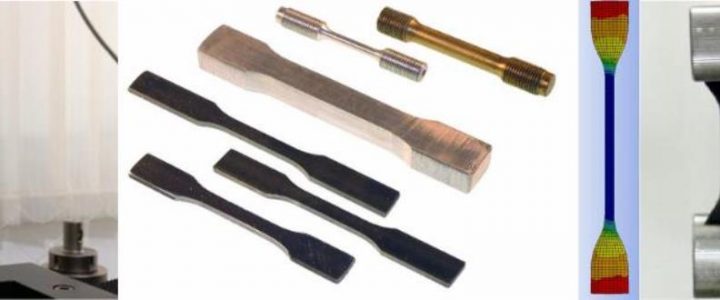
Uniaxial Tension Test (Directional) (ASTM D638, ISO 527):
The stress (ζ) in a uniaxial tension testis calculated from;
ζ = Load / Area of the material sample ……………………………………..(1)
The strain(ε) is calculated from; ε = δl (change in length) / l (Initial length) ……………..(2)
The slope of the initial linear portion of the curve (E) is the Young’s modulus and given by; E = (ζ2- ζ1) / (ε2- ε1) ……………………………………..(3)
4 Point Bend Flexure Test (ASTM D6272):
The four-point flexural test provides values for the modulus of elasticity in bending, flexural stress, flexural. This test is very similar to the three-point bending flexural test. The major difference being that with the addition of a fourth nose for load application the portion of the beam between the two loading points is put under maximum stress. In the 3 point bend test only the portion of beam under the loading nose is under stress.
4 Point Bend Flexure Test
This arrangement helps when testing high stiffness materials like ceramics infused polymers, where the number and severity of flaws under maximum stress is directly related to the flexural strength and crack initiation in the material. Compared to the three-point bending flexural test, there are no shear forces in the four-point bending flexural test in the area between the two loading pins.
Poisson’s Ratio Test as per ASTM D3039:
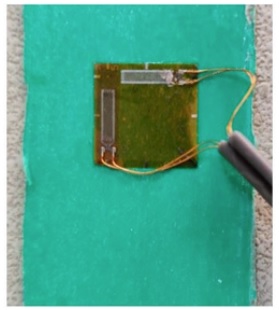
Poisson’s ratio is one of the most important parameter used for structure design where all dimensional changes resulting from application of force need to be taken into account, specially for 3d printed materials. For this test method, Poisson’s ratio is obtained from strains resulting from uniaxial stress only. ASTM D3039 is primarily used to evaluate the Poison’s ratio. Testing is performed by applying a tensile force to a specimen and measuring various properties of the specimen under stress. Two strain gauges are bonded to the specimen at 0 and 90 degrees to measure the lateral and linear strains. The ratio of the lateral and linear strain provides us with the Poisson’s ratio.
Flatwise Compression Test as per ASTM D695:
The compressive properties of 3d printed materials are important when the product performs under compressive loading conditions. The testing is carried out in the direction normal to the plane of facings as the core would be placed in a structural sandwich construction. The test procedures pertain to compression call for test conditions where the deformation is applied under quasi-static conditions negating the mass and inertia effects.
Uniaxial Flatwise Compression Testing
The test procedures pertaining to compression call for test conditions where the deformation is applied under quasi-static conditions negating the mass and inertia effects.
Modified Compression Test as per Boeing BSS 7260:
Modified ASTM D695 and Boeing BSS 7260 is the testing specification that determines compressive strength and stiffness of polymer matrix composite materials using a loading compression test fixture. This test procedure introduces the compressive force into the specimen through end loading.
Modified Compression Test as per Boeing BSS 7260
Axial Fatigue Test as per ASTM D7791 & D3479:
ASTM D7791 describes the determination of dynamic fatigueproperties of plastics in uniaxial loading conditions. Rigid or semi-rigid plastic samples are loaded intension (Procedure A) and rigid plastic samples are loaded incompression (Procedure B) to determine the effect of processing, surface condition, stress, and such,on the fatigue resistance of plastic and reinforced composite materials subjected to uniaxial stress for a large number of cycles.The results are suitable for study of high load carrying capability of candidate materials. ASTM recommends a test frequency of 5hz or lower.The tests can be carried out under load/stress or displacement/strain control. The test method allows generation of stress or strain as a function of cycles, with the fatigue limit characterized by failure of the specimen or reaching 10E+07 cycles.The maximum and minimum stress or strain levels are defined throughan R ratio.
Axial Fatigue Test as per ASTM D7791
3 Point Bend Flexure Test (ASTM D790):
Three point bending testing is carried out to understand the bending stress, flexural stress and strain of composite and thermoplastic 3d printed materials. The specimen is loaded in a horizontal position, and in such a way that the compressive stress occurs in the upper portion and the tensile stress occurs in the lower portion of the cross section.This is done by having round bars or curved surfaces supporting the specimen from underneath. Round bars or supports with suitable radii are provided so as to have a single point or line of contact with the specimen. The load is applied by the rounded nose on the top surface of the specimen. If the specimen is symmetrical about its cross section the maximum tensile and compressive stresses will be equal. This test fixture and geometry provides loading conditions so that specimen fails in tension or compression.
3 Point Bend Flexure Test
For most composite materials,the compressive strength islower than the tensile and thespecimen will fail at thecompression surface. This compressive failure isassociated with the localbuckling (micro buckling) ofindividual fibres.
Drop Weight low Velocity Impact Test (ASTM D7136, ISO 6603):
The importance of understanding the response of structural composites to impact events cannot be emphasized enough. Low velocity impact occurs at velocities below 10 m/s and is likely to cause some dents and visible damage on the surface due to matrix cracking and fibre breaking, as well as delamination of the material. In some materials, impact tests characterize the face sheet quality and if they are suitable for the application.
Drop Weight low Velocity Impact Test
Summary:
A variety of standardized mechanical tests on unreinforced and reinforced 3d printed materials including tension, compression, flexural,and fatigue have been discussed.
Mechanical properties of 3d printed polymers, fiber-reinforced polymeric composites immensely depend on thenature of the polymer filament, fiber, and the layer by layer interfacial bonding. Advanced engineering design and analysis applications like Finite Element Analysis use this mechanical test data to characterize the materials. These material properties can be used to develop material models for use in FEA softwares like Ansys, Abaqus, LS-Dyna, MSC-Marc etc.
Conclusion
The use of composite materials in drone manufacturing presents a promising avenue for enhancing UAV performance. However, it also necessitates comprehensive testing to ensure the safety, reliability, and durability of these drones. As the drone industry continues to grow and evolve, so too will the methods for testing and optimizing the use of composite materials in drone construction.
Keywords: UAV, composite materials, drone components, material testing, CFRP, GFRP, finite element analysis, bending test.
References:
M Sönmez, Ce Pelin, M Georgescu, G Pelin, Md Stelescu, M Nituica, G Stoian, Unmanned Aerial Vehicles – Classification, Types Of Composite Materials Used In Their Structure And Applications.
Camil, Lancea et al., Simulation, Fabrication and Testing of UAV Composite Landing Gear. MDPI Journal, https://doi.org/10.3390/app12178598
National Research Council, Airframe Materials and Structures, Enabling Science for Military Systems
Non-linear Hyperelastic Material Characterization Testing for FEA
The characterization of materials for Finite Element Analysis (FEA) and Computational Fluid Dynamics (CFD) is a specialized process that involves extensive laboratory testing. At AdvanSES, we have become industry leaders in this field, particularly with our focus on the characterization of polymer materials. Through a series of specific tests, we are able to determine the unique properties of each material, thus providing valuable data for FEA and CFD.
Pure Shear
Our testing process begins with a pure shear test. This involves applying uniaxial tension to a test specimen using either a parallel or tangential method. The response of the material to this stress provides a baseline understanding of its characteristics under tension.
Volumetric Compression
We then proceed to a volumetric compression test. This study involves placing a sample of the material under hydrostatic compression deformation. The way the material responds to this form of stress provides valuable data on its behavior under compression.
Uniaxial Compression
Uniaxial compression testing is another key component of our testing process. Here, we evaluate the response of the material when compression stress is applied along a single axis. This test gives us a clear picture of how the material behaves under a single axis of compression stress.
Uniaxial Tension
Uniaxial tension testing involves applying tensile stress to a specimen. The result of this test provides us with further insights into the behavior of the material under tension.
Biaxial Tension
A biaxial tension test involves placing tensile stress on a specimen in two simultaneous directions. This test is particularly useful in understanding the behavior of a material under multiple tensions.
Creep and Stress Relaxation
The final testing stage is the creep and stress relaxation test. This involves a uniaxial tensile test followed by the maintenance of the elongation on the specimen for a specified duration. By observing the material’s response over this period, we can gain valuable insights into the long-term behavior of the material under stress.
Our laboratory is located at Plot No. 49, Mother Industrial Park, Zak-Kadadara Road, Kadadara, Taluka: Dehgam, District: Gandhinagar, Gujarat 382305, India.
For more information about our services and how we can assist with your material characterization needs, give us a call at +91-9624447567 or send us an email at [email protected].